How-To
The Constellation Ceiling, Done Quietly
Faint lines and soft points of light, never theme park. How to plan and paint a calm constellation ceiling, with safety notes and a small first step.
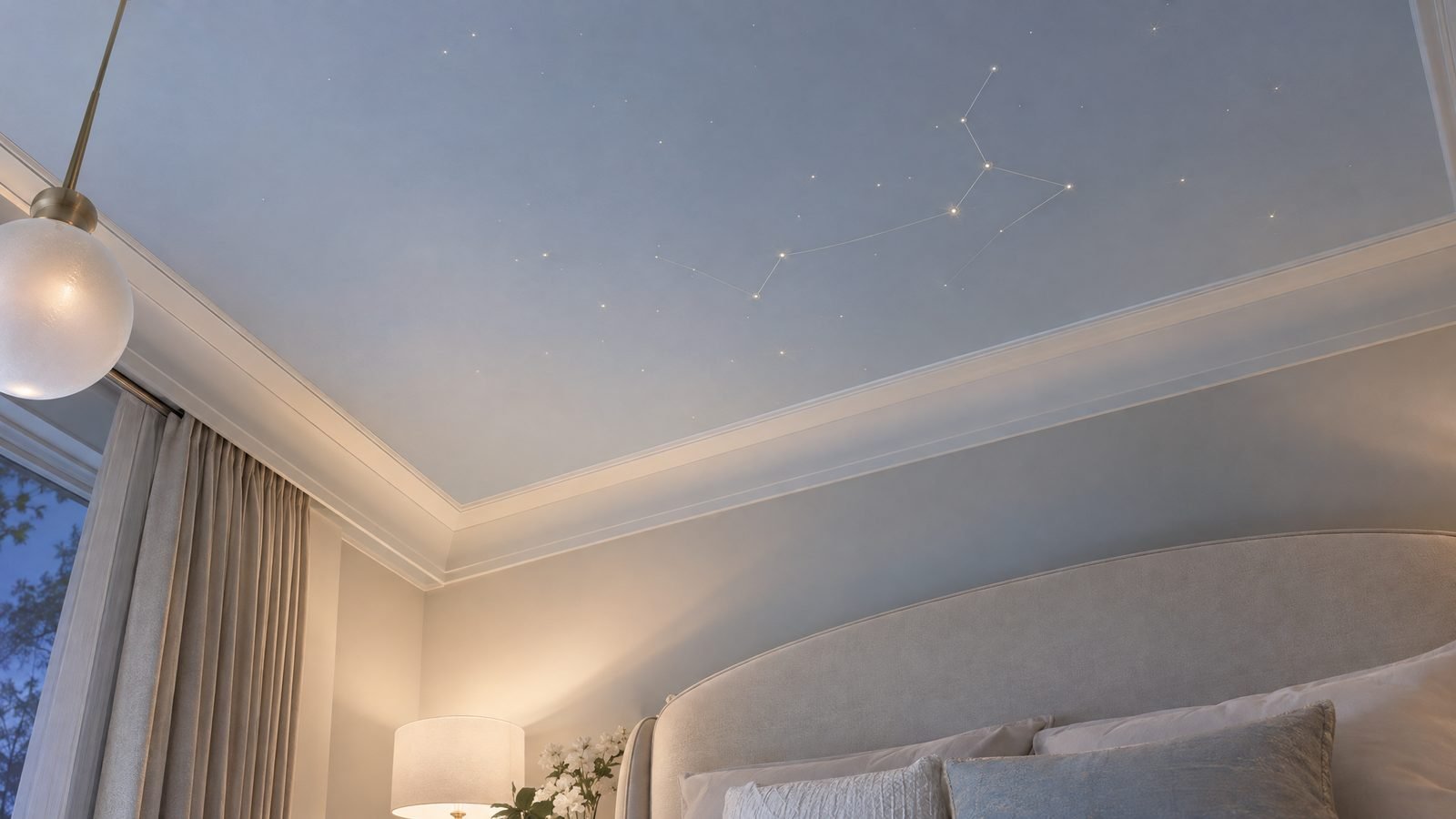
Lie back, look up, and see a few faint stars joined by a hairline. Not a theme park sky with hundreds of glowing dots. Just one small constellation above the bed, so quiet that a visitor might only notice it on the second night. That is the constellation ceiling done the Extra Celestial way.
Why quiet works better
A ceiling covered in stars is fun for a week. After that it can feel busy, especially in a room meant for rest. A small, faint pattern does something different. It gives the ceiling a story without asking for attention. It feels personal, like a note to yourself.
Keep three ideas in mind:
- Small: one constellation, or two at most, usually above the bed.
- Faint: pale dots and lines only a few shades away from the ceiling colour.
- Matte: a flat ceiling with soft points, not glossy or glowing plastic.
Choose your sky
You can use a real constellation or draw your own pattern.
Real constellations that read well
Some shapes are easy to recognise and look lovely small.
- Cassiopeia, a simple W of five stars.
- The Plough (also called the Big Dipper), seven stars forming a ladle, part of Ursa Major.
- Orion's belt, three stars in a row, with the wider figure around it if you want more.
- The Summer Triangle, three bright stars from three different constellations: Vega, Deneb and Altair.
Look at a star chart or a stargazing app to copy the shape. You do not need perfect accuracy, but keeping the real angles makes it feel right.
Your own pattern
You can also draw an original constellation. Some people join the stars to make a shape that means something to them. Keep it to between five and nine stars, so it stays calm.
Choose your ceiling colour
- Pearl white keeps the room airy. Draw the stars in a slightly brighter pearl and the lines in a soft silver grey.
- Ice blue feels like early evening. Pearl dots look gentle and clear on it.
- Deep space navy is dramatic and cosy in a bedroom with good daylight. Use pearl or pale silver dots, and keep the lines very fine.
Whatever you choose, use a matte ceiling paint. Sheen on a ceiling shows every bump and reflects your lamps.
What you need
- A paper plan of your constellation
- Low-tack painter's tape and a soft pencil
- A sample pot of pearl or pale silver paint for the stars
- A sample pot a shade or two from your ceiling colour for the lines
- A fine artist's brush, and a round dotting tool or the end of a pencil for dots
- A steady stepladder, safety glasses and a dust sheet
How to do it
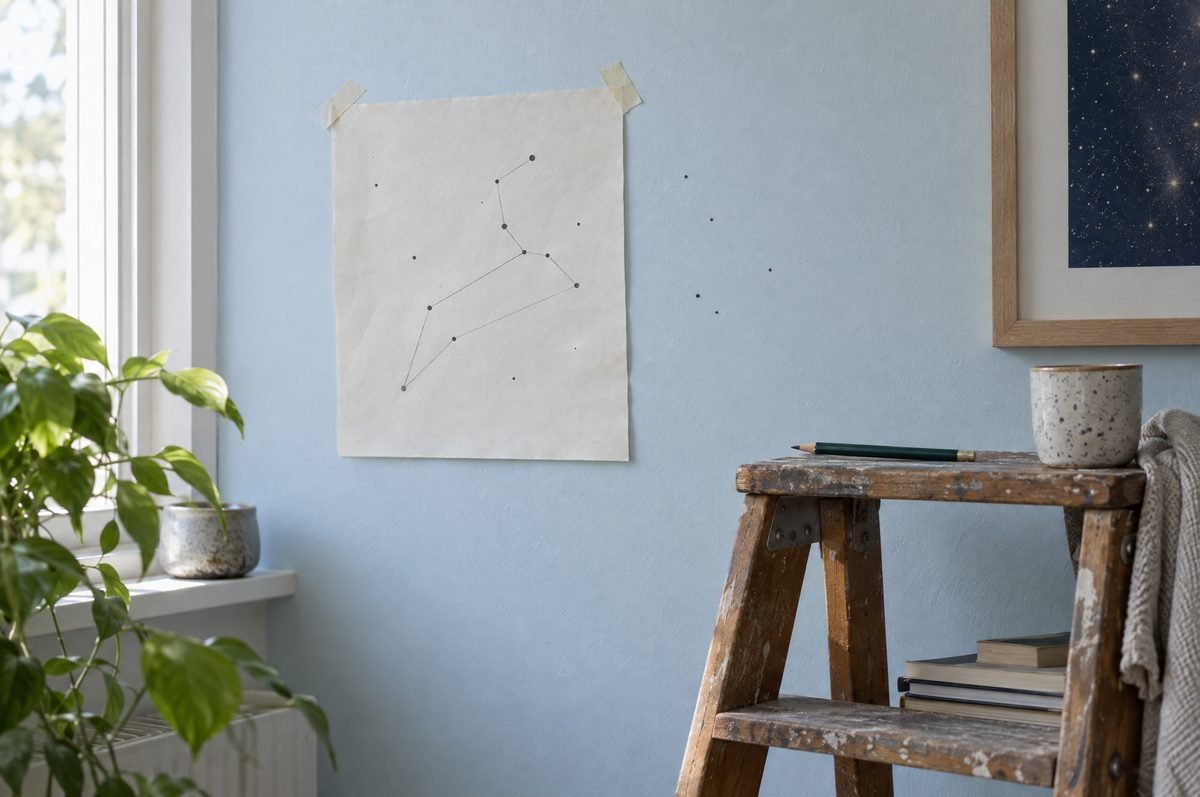
- Plan on paper. Draw your constellation at a small scale. Mark three star sizes: large, medium and small. Real skies have stars of different brightness, and varied dots look far more natural.
- Scale it up. Decide how wide it should be on the ceiling. Above a double bed, roughly the width of the bed is a good size. Measure and mark the outer stars first with tiny pencil dots.
- Mark the rest. Fill in the other stars, checking against your plan. Step down and look from the bed. Adjust before you paint anything.
- Paint the stars. Dip the dotting tool in the pearl paint and press it on once for each star. Use a larger tool for bright stars and a smaller one for faint ones. Let it dry.
- Add the lines. With the fine brush and the soft line colour, join the stars with thin, light strokes. If you are unsure, use tape on either side to keep a straight edge, and remove it while the paint is still a little wet.
- Look at it at night. Under lamplight, faint lines can almost vanish, which is lovely. If you want them a touch clearer, add one more thin pass.
Safety first
- Working above your head is tiring. Take breaks and come down the ladder to rest your arms.
- Always use a stable stepladder on a flat floor. Do not stand on chairs or the bed. If you can, have someone nearby.
- Wear safety glasses. Paint drips upwards into eyes more easily than you think.
- Keep the room ventilated while you paint and while it dries.
- If you are thinking about a wired star ceiling with fibre optics or tiny LEDs, have it installed by a qualified electrician, and check your local rules for electrical work.
What to leave out
- Glow-in-the-dark plastic stars. They are cheerful but hard to make calm, and they tend to look like a theme park.
- Planets, rockets and comets all at once. One constellation tells a clearer story.
- Bright coloured lines. Keep everything pale and soft.
- A whole ceiling of random dots. If you want more stars, add a few tiny loose dots around your constellation and stop there.
Light it softly
A quiet ceiling looks best with low side light. A frosted glass pendant on a dimmer, or bedside lamps that bounce a little light upwards, will make the pearl dots glow faintly at night. Avoid a bright downlight right next to the constellation. It flattens everything.
Start smaller still
Not ready for the ceiling? Try the same idea on a sheet of thick paper first. Paint the stars and lines, pin it above the bed for a week, and see how it feels. If you love it, move up to the ceiling.
For more calm ways to bring the sky indoors, the free Extra Celestial Starter Guide includes three frame-ready constellation prints and a light-through-the-day card. You can get it here: the free Starter Guide.
One small patch of sky, faint and soft, can make a room feel like it belongs to you. Look up and rest.