Finishes
Pearl Walls: Choosing a Paint Finish With a Gentle Glow
What "pearl" means on a paint tin, which finish gives a soft glow, and the walls where it looks best. A calm, practical guide with a sample test.
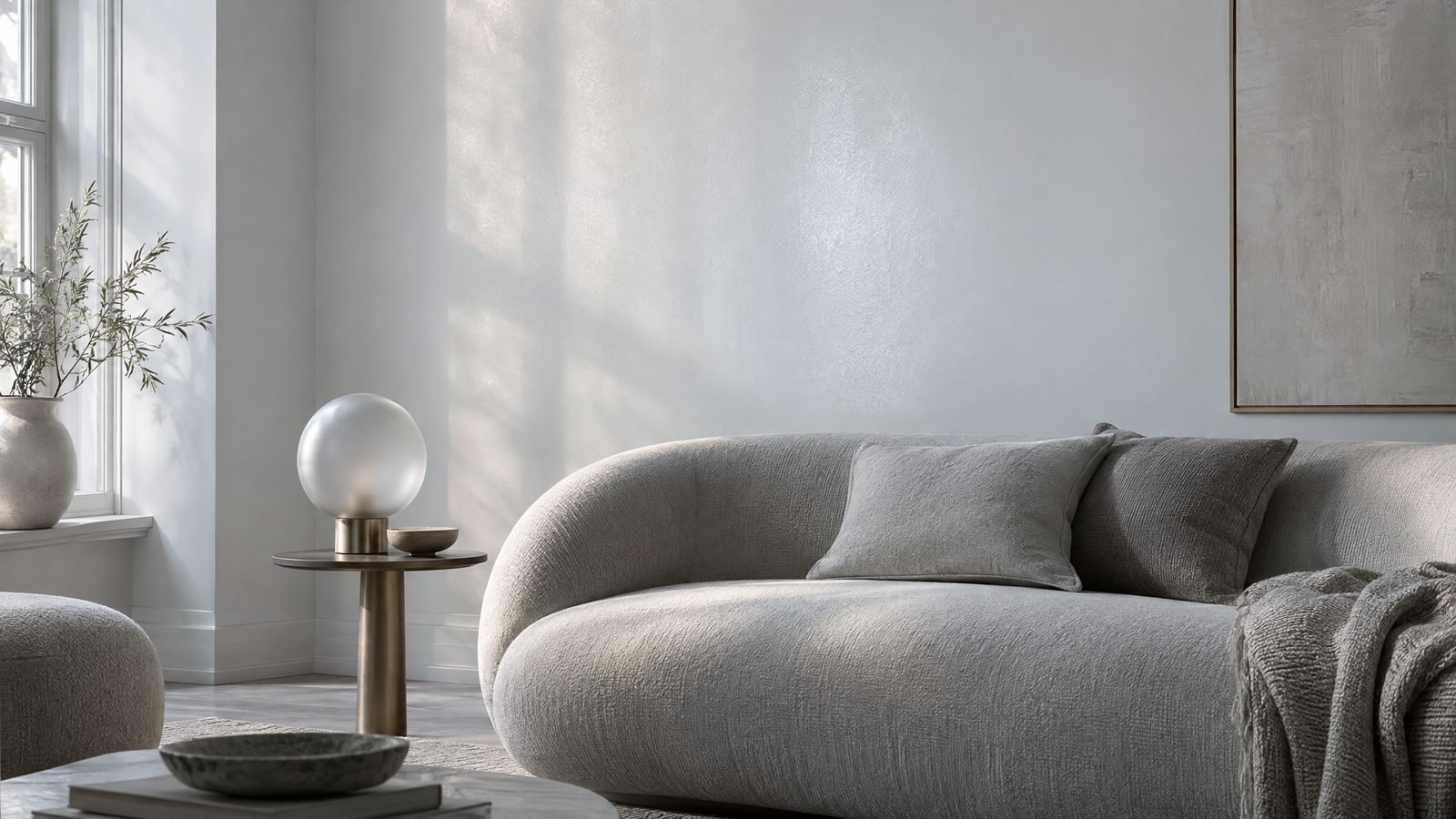
A pearl wall does not shine at you. It glows. In the morning it looks almost plain. Late in the day, when light slides across it from the side, a soft sheen appears, like the inside of a shell. That quiet change is why pearl is one of the easiest ways to bring an otherworldly finish into a calm home.
The tricky part is the word itself. "Pearl" means different things on different paint tins. Here is how to choose well.
Two meanings of "pearl"
Pearl as a sheen level
Some paint ranges use "pearl" as the name of a sheen level. It usually sits around the middle of the scale, close to eggshell or satin. It has a soft, low lustre rather than a true shine. The exact level changes from maker to maker, so always look at a real sample, not only the name.
This kind of pearl is a practical choice. It wipes clean more easily than flat matte paint and still looks gentle.
Pearl as a pearlescent effect
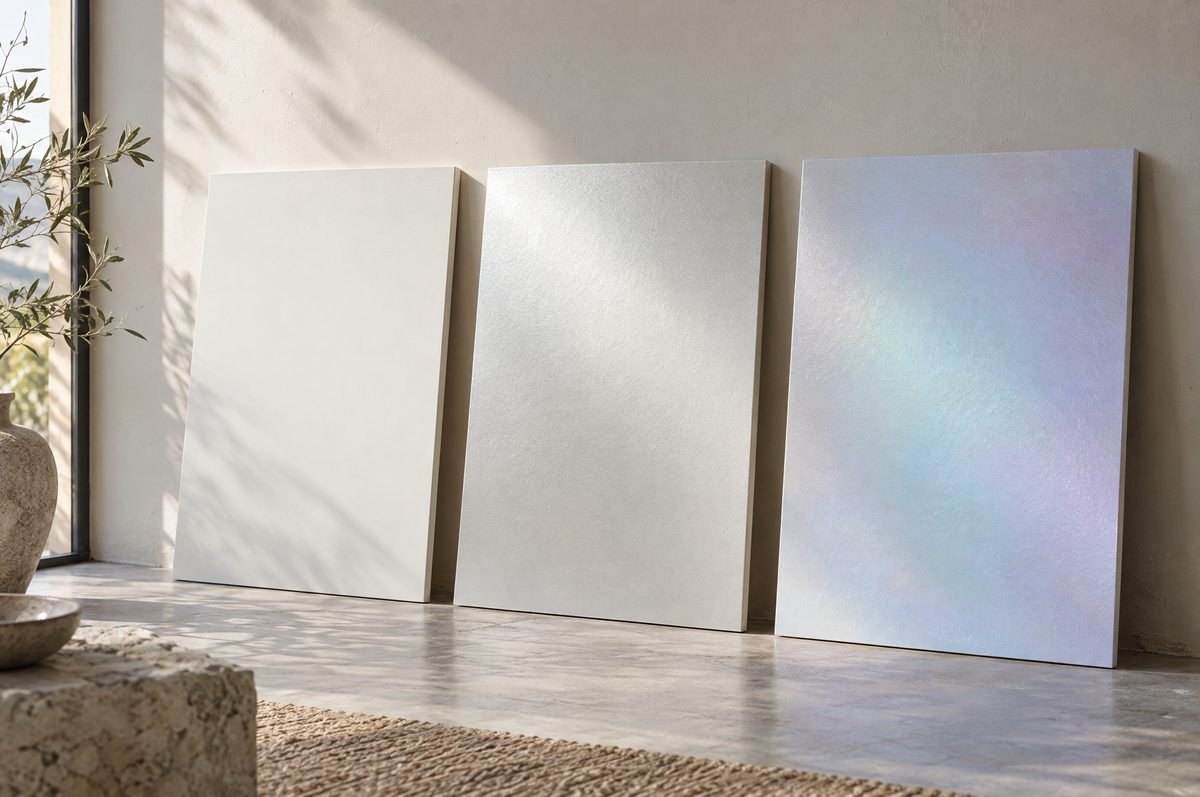
Other paints and glazes are pearlescent. They contain tiny flat flakes that reflect light in layers, so the surface seems to glow from within and can shift slightly in colour as you move. These are often sold as effect paints or glazes, and they are usually brushed or rolled over a base colour.
This is the one that feels most celestial. It is also the one that needs the most care, because a little goes a long way.
A third option: mineral glow
Limewash and some mineral paints are fully matte, yet they have a cloudy depth that catches light in a soft, uneven way. They do not shimmer, but they glow. If you want something calm and natural with a hint of moonlight, this is worth a look. Limewash works best on mineral surfaces such as plaster, so check what your wall needs before you start.
Choosing the colour under the glow
The base colour matters as much as the finish.
- Pearl white is the classic. Look for a white with a whisper of grey or blue rather than a stark bright white.
- Ice blue gives a cool, airy glow that suits bedrooms and bathrooms.
- Pale lavender turns the sheen softly violet at dusk.
- Silver grey makes a pearlescent glaze look like brushed moonlight.
Pearlescent finishes pick up the colour of the light around them. Under warm lamps they lean creamy. Under daylight from a north-facing window they lean cool. Test in your own room.
Where pearl looks best
- A wall that gets side light. Light skimming across the wall brings out the glow. A wall at right angles to a window is often perfect.
- The wall behind a bed. Lit by bedside lamps, it glows gently at night.
- An alcove or a chimney breast. A small, framed area feels deliberate and special.
- A hallway end wall. The first thing you see when you come home, softly glowing.
- A smooth wall. Sheen shows every bump, so pearl rewards a well-prepared surface.
Where to think twice
- Uneven or patched walls. Any sheen will highlight dents and filler. Matte or limewash is kinder.
- A wall facing a bright window head on. Direct light can turn sheen into glare.
- Every wall in the room. Pearl on four walls loses its magic. Keep it to one surface, with the rest of the room matte and calm.
- A room already full of shine. If you have glossy tiles, chrome and mirrors, let the walls stay quiet.
How to test before you commit
Never choose a pearl finish from a chip in a shop. Do this instead.
- Paint two sample boards or large pieces of card, each with two coats. If you are testing a glaze, paint the base colour first.
- Tape them to the wall you want to paint, one high and one low.
- Look at them in the morning, mid-afternoon, at dusk and under your evening lamps.
- Move them to a second wall and look again.
- Keep the one you still like after two days.
Most people are surprised by how different a finish looks at different times. This small test saves a lot of repainting.
Getting a good result
- Prepare well. Fill holes, sand smooth, wipe away dust. Sheen is honest about every flaw.
- Use the right primer for your wall, and follow the tin.
- Keep a wet edge. With sheen and glazes, overlapping dry paint can leave marks. Work in sections from one edge to the other.
- Thin coats. Two thin coats look calmer than one heavy one.
- For pearlescent glaze, roll it on evenly and lay it off in one direction, or use soft, loose strokes for a cloudy look. Practise on a board first.
- Ventilate. Open windows while you paint and while it dries, and read the safety notes on the tin.
- Use a steady stepladder, and do not overreach. Move the ladder instead.
Try this this weekend
Pick one small wall: an alcove, the space behind a bedside table, or a short hallway wall. Paint a sample board, live with it for two days, then do just that one area. Light it from the side with a lamp in the evening. If you love it, you have found your one shimmer surface. If not, you have only painted a board.
The free Extra Celestial Starter Guide has a page on every finish, from pearl to frosted glass, with where to use each one and how much. You can find it here: the free Starter Guide.
A pearl wall is a slow kind of beauty. It asks for good light and a little patience, and it pays you back every evening.